

When looking for a new job, many professionals greatly care about how it fits into their daily lives. Today, flexibility, balance, and well-being play a bigger role than ever.
Remote work is often discussed, but the experience can look very different from one company to another. What matters most is how it works in real life.
At SOFTSWISS, remote work has been part of the company culture for many years. It shapes how teams are built, how people collaborate, and how the business grows. With experience from both sides, employees working remotely and the organisation supporting them, the approach is designed to be practical, flexible, and sustainable.
Choice Comes First
People work differently. Some focus best at home, others prefer an office, and many feel most comfortable with a mix of both. One format rarely suits everyone over time.
That’s why SOFTSWISS supports several working options: fully remote, office-based, or hybrid. With offices in Poland, Malta, and Georgia, employees can choose what works best for them, and change it later if their situation changes.
In practice, many team members choose remote or hybrid work because having more control over how they work helps them stay focused, motivated, and engaged. When work fits more naturally into life, growth feels more sustainable.
What Remote Work Means for Employees
Flexible work models are now common across technology-driven industries. According to research from a leading IT job platform, 96% of technical specialists prefer remote or hybrid work, with more than half choosing fully remote roles. Here’s how those benefits show up day to day.
More Time, Less Stress
Daily commuting can be exhausting. Traffic, delays, transport costs, and strict schedules often add stress before the workday even starts. Remote work removes that pressure. Without a commute, people get time back – time for rest, movement, or family. This often leads to steadier energy levels and a better daily rhythm.
Better Work–Life Balance
Something that probably everyone strives for. Having control over working hours makes a real difference. Gallup reports that 85% of fully remote employees say flexible schedules significantly improve their work–life balance. Being able to plan the day around personal routines helps reduce stress, makes it easier to switch off after work, and lowers the risk of burnout over time.
Positive Impact on Well-Being
Remote work also supports mental and physical health. A survey by the U.S. Career Institute found that 93% of professionals experienced positive effects on their mental health, and 90% reported improvements in their physical health.
Working from home allows people to feel comfortable. Fewer distractions and more control often lead to healthier habits, ranging from improved sleep to increased physical activity.
How Remote Work Supports SOFTSWISS
Remote work isn’t only about flexibility for employees. When built as a long-term model, it also strengthens how a company operates.
Smarter Use of Resources
Maintaining office space requires ongoing investment. A remote-first approach helps reduce these costs. Industry estimates suggest companies can save up to $11,000 per employee each year, freeing up resources for people development, product improvement, and long-term stability.
Focus on Results, Not Presence
At SOFTSWISS, performance is measured by outcomes. Clear processes, transparency, and trust support this approach. Research published on SSRN shows that flexible work models can improve performance when these foundations are in place. This allows people to work during their most productive hours, leading to stronger ownership and consistently high standards.
Access to Global Talent
Remote work removes location as a hiring barrier. Skills and experience matter more than geography. As of 2025, SOFTSWISS team members work from 53 countries. This global setup helps build diverse teams and makes hiring faster and more flexible, without requiring relocation, unless it makes sense for the individual.
Final Thoughts
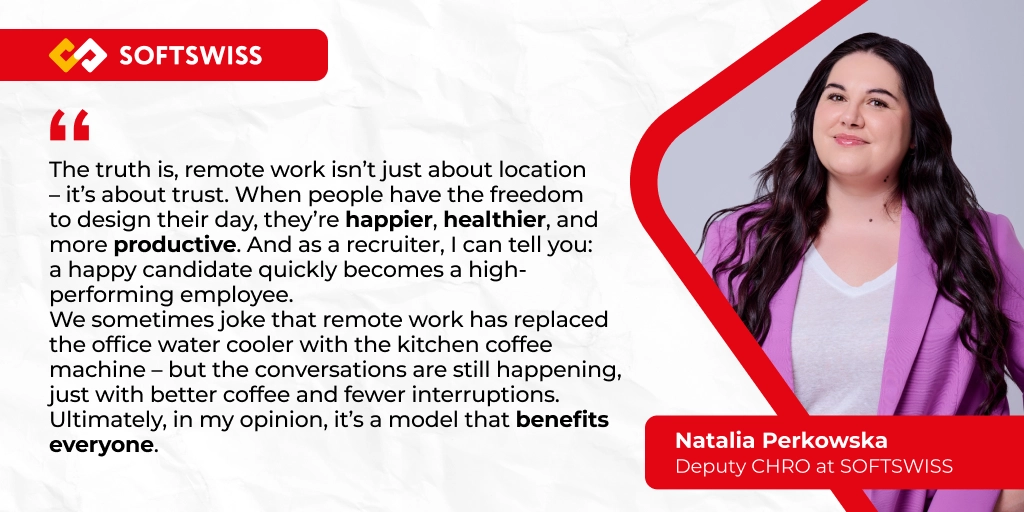
At SOFTSWISS, remote work reflects a people-first approach to building teams and planning for the future. It supports balance, respects different working styles, and adapts as work continues to change. When people can do their best work in a way that fits their lives, everyone benefits.
If this approach sounds like the right fit, explore our current roles and see where your experience and preferred way of working could take you.